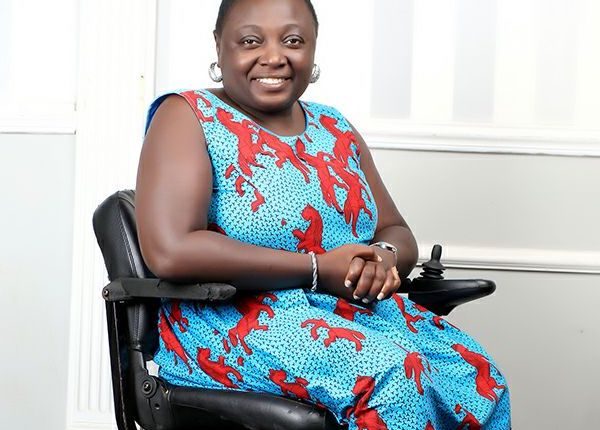
Lois Auta is a Nigerian disability rights advocate, organisational leader, and former political candidate who has worked across civil society and political arenas to promote inclusion of women and persons with disabilities in governance, social development, and public policy. Her public profile is grounded in her work establishing and leading advocacy organisations, campaigning for inclusive legislation, and contesting elective positions in Nigeria.
Early Life and Background
Lois Auta was born on 29 April 1980 in Jos, Plateau State, Nigeria. She is originally from Kukum Gida Kagoro in Kaduna State. At the age of two, she contracted poliomyelitis, which resulted in a permanent physical disability and required the use of a wheelchair for mobility. Growing up with a disability in Nigeria, she faced social and structural barriers that influenced her later activism and leadership.
Education
Auta pursued tertiary studies in public administration at the University of Abuja, where she earned both a diploma and a Bachelor of Science degree in Public Administration. She furthered her education by studying global business administration at an international institution based in Washington, DC.
In 2014, she was selected as a Mandela Washington Fellow, part of the Young African Leaders Initiative, which brought emerging African civic and public leaders to the United States for training in leadership and advocacy. This fellowship involved exposure to civic leadership, project development, and networking that supported her later initiatives in Nigeria.
Organisational Leadership and Advocacy Work
Cedar Seed Foundation
Auta is the founder and chief executive officer of the Cedar Seed Foundation, a Nigerian non‑governmental organisation that focuses on integrating disability issues into mainstream development discourse. The foundation’s work includes advocacy for inclusive legislation, awareness campaigns, and efforts to expand access to social, economic, and political opportunities for persons with disabilities.
Through the foundation, she has advocated for structural reforms to ensure inclusion of persons with disabilities in national development plans, employment, education, and public policy. One visible initiative is the “Vote for Her” campaign, launched in 2025 to increase political participation of women and girls with disabilities and promote their recognition as voters, candidates, and decision‑makers.
Network of Women with Disabilities
Lois Auta also leads the Network of Women with Disabilities, an organisation focused on empowering women and girls with disabilities across Nigeria. This network engages in multiple thematic areas including political inclusion, economic empowerment, health advocacy, and mentorship, with membership that spans the Federal Capital Territory and other states. The network’s work includes grassroots outreach, training programmes, and collaborative efforts to raise visibility and inclusion of its members.
Other Leadership Roles
In addition to her primary organisational efforts, Auta has held leadership or board positions in several disability‑focused and community organisations. These have included roles in disabled sports clubs, cooperative societies for persons with disabilities, and umbrella associations representing persons with disabilities. Her involvement extends to networks that advocate for policy reforms and institutional inclusion at both national and sub‑national levels.
Political Engagement
Auta has sought elective office on multiple occasions, reflecting a commitment to translating her advocacy into formal governance roles:
In 2019, she ran for a seat in the Nigerian House of Representatives to represent the AMAC (Abuja Municipal Area Council)/Bwari Federal Constituency. Her candidacy was noted as a significant moment in Nigerian politics, as she was one of the first women living with a physical disability to contest a federal legislative seat.
In 2022, she contested the All Progressives Congress (APC) primary election for the Kaduna State House of Assembly seat to represent Kaura Constituency. She lost the primary, and during the process she described encountering discriminatory attitudes rooted in both gender and disability bias.
Her experiences in these contests illustrated the systemic barriers that many candidates with disabilities — especially women — face within political party structures and the broader electoral process.
Advocacy and Policy Focus
Auta’s advocacy extends beyond organisational management to public policy engagement. She has repeatedly called for:
Inclusive legislation that guarantees full participation of persons with disabilities in all aspects of public life.
Implementation and enforcement of disability rights laws to address gaps between legal provisions and lived realities.
Quota systems and affirmative action for people with disabilities in employment and governance structures.
Accessible public services and infrastructure, including fully accessible polling units and civic processes.
Her statements have emphasised that inclusion should be understood as a matter of human rights and equal citizenship rather than charity or concession.
Challenges and Public Criticism
There are no widely documented legal controversies or corruption allegations involving Lois Auta in the public domain. The most prominent challenges associated with her relate to discrimination and bias in political participation — especially comments and behaviours directed at her as a woman with a disability seeking elective office. Reports from her political campaigns highlighted cases where party officials and other actors attempted to marginalise her candidacy or expected her to defer to others. These incidents were framed as reflections of societal attitudes rather than personal misconduct.
Her political journey has been marked by critiques of structural exclusion and limited support for candidates with disabilities within party hierarchies and electoral mechanisms.
Recognition and Public Profile
Throughout her career, Auta has received recognition for her civic engagement and advocacy work. She has been featured as part of lists celebrating women challenging stereotypes and breaking barriers in Nigerian civic life, particularly highlighting her role as the first physically challenged woman to contest for Nigeria’s House of Representatives in 2019. Additionally, she has been involved in international civil society networks and spoken publicly about disability rights and inclusion. Her background and work have been amplified by media outlets focusing on social inclusion, gender equity, and policy reform.
Current Status and Ongoing Work (2025)
As of 2025, Lois Auta continues to engage in disability rights advocacy, organisational leadership, and initiatives to expand political participation for women and people with disabilities in Nigeria. Her leadership in the Cedar Seed Foundation and the Network of Women with Disabilities remains central to her activities, and she is actively involved in national campaigns for inclusive governance.
Her profile includes participation in forums and advocacy efforts to influence policy implementation and public awareness, reflecting an ongoing commitment to disability inclusion in socio‑economic development, political engagement, and public policy.
Summary
Lois Auta’s biography reflects a trajectory from living with disability in a context of social barriers to national civil society leadership and political engagement. Her work spans organisational advocacy, policy discourse, and efforts to dismantle exclusionary structures in Nigerian society. Her entry into elective politics, though not resulting in office, marked important milestones in representation and exposed enduring challenges for women and people with disabilities seeking public office. Through her continued leadership, she remains an active voice in campaigns aimed at expanding inclusion, equity, and human rights for marginalised groups in Nigeria.